Learn how entertainment electricians operate conventional and moving luminaires, followspots, effects machines, motor controls, and focusing accessories. Covers ETCP exam Domain 1F with 10 exam questions on hands-on equipment operation.
Learn how entertainment electricians assemble and install power connectors, control cables, terminals, extension cords, feeder cables, multi-cables, and distribution equipment. Covers ETCP exam Domain 1E with 10 exam questions on hands-on assembly and installation skills.
Learn how entertainment electricians set up lighting control systems including consoles, DMX512/RDM distribution, network infrastructure (Art-Net, sACN), equipment addressing, and wireless data transmission. Covers ETCP exam Domain 1D with 10 exam questions.
Learn how entertainment electricians set up portable power distribution, feeder and branch circuit wiring, grounding and bonding connections, and specialized environmental applications for wet and outdoor venues. Covers ETCP exam Domain 1C with 15 exam questions.
Learn how entertainment electricians calculate weight distributions for overhead electrical equipment and specify safe hanging techniques using clamps, motors, trusses, and safety systems. Covers ETCP exam Domain 1B with 8 exam questions.
A complete guide to entertainment electrical power connectors: stage pin (2P&G), NEMA Edison, twist-lock, Camlok, and IEC 60309. Understand ratings, wiring, color codes, and when to use each type.
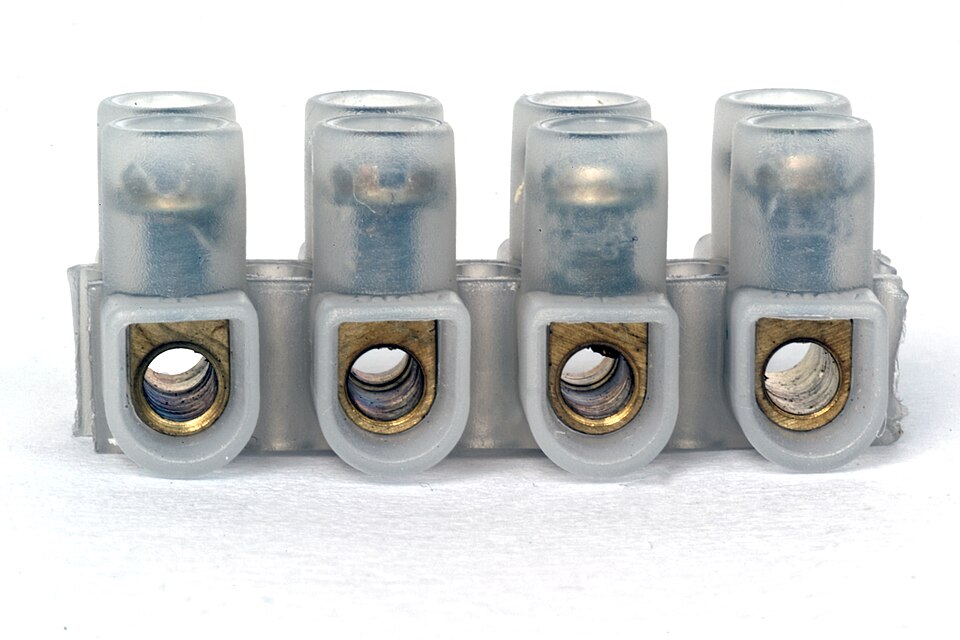
Learn the three terminal types used in entertainment electrical equipment: screw terminals (torque specs and ferrules), spring-loaded cage clamp terminals, and crimp connections (ring, spade, and butt connectors). Covers tooling, inspection, and selection criteria.
Everything entertainment electricians need to know about portable extension cords: cord type designations (SOOW, SJTW), gauge selection, voltage drop, NEC prohibited uses, GFCI requirements, and inspection criteria.
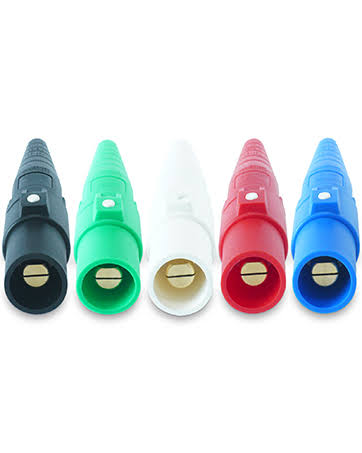
A complete guide to portable power feeder cables in entertainment: Type W cable, conductor sizing and ampacity, Camlok/PowerLok single-pole connectors, color coding by phase, and the ground-first connection sequence.